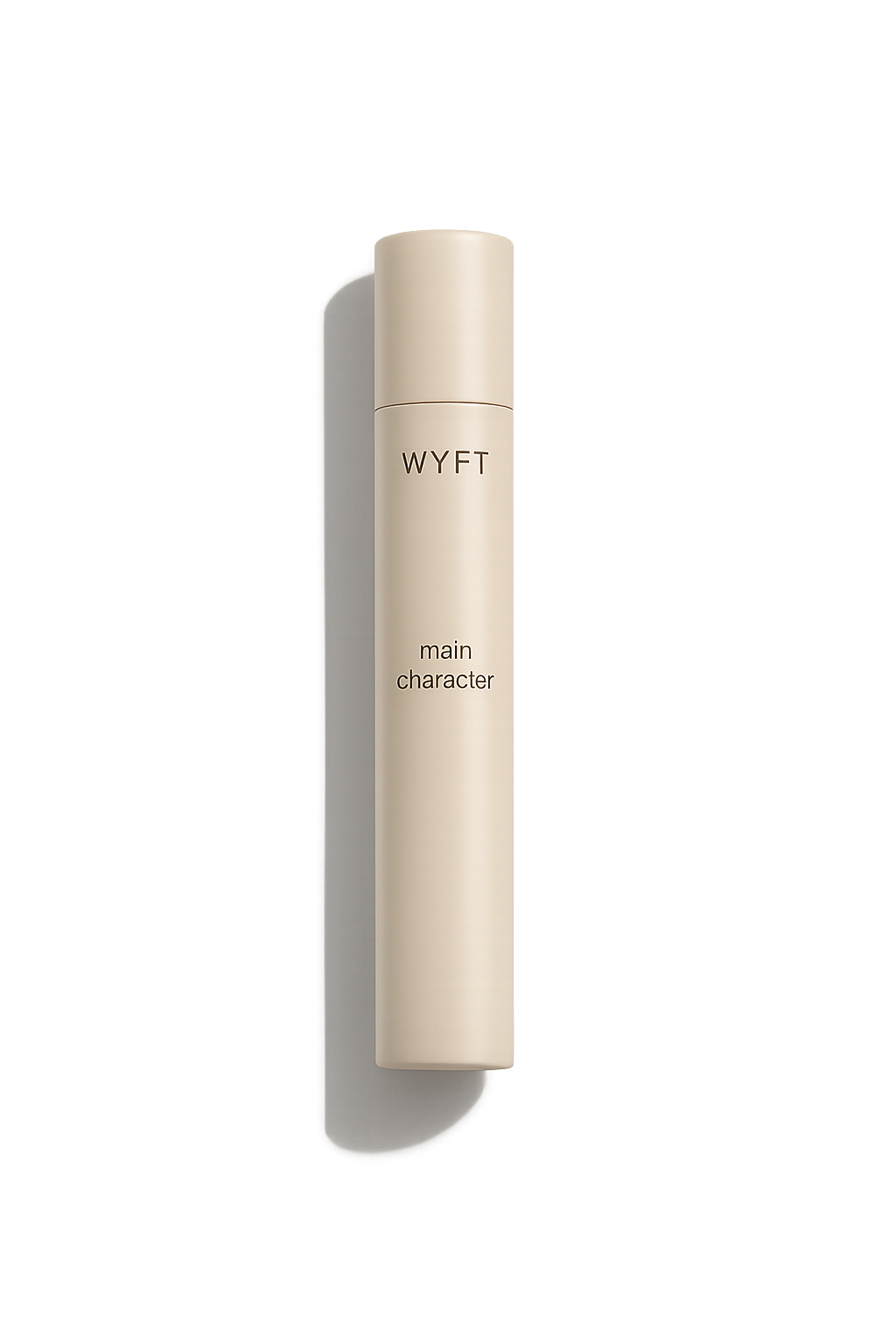
mood-targeted scent sticks
shift your
state.
find your mood. take a wyft. feel the shift.
curated kits

the entrepreneur
Focus. Build. Recover. Repeat.
$79

heartbreak survival kit
We've all been there.
$79
"what's your wyft today?"
the collection.
20 moods. 20 states. one wyft away. six curated kits.
scent science
the oldest technology
you carry in your pocket.
Humans have been using scent to shift their state for at least 4,000 years. Ancient Egyptians burned kyphi — a blend of myrrh, frankincense, and juniper — to calm the mind before sleep. Ayurvedic medicine built entire healing systems around inhaled botanicals. Japanese forest bathing, shinrin-yoku, is a government-endorsed practice that prescribes time among pine trees for measurable reductions in cortisol. Tibetan monks have burned juniper and cedar for centuries not as ritual but as tool — because it works.
Different cultures. Different names. The same understanding: scent reaches the brain faster than any other sense.
why it works
When you inhale a scent, the molecules bypass the thalamus — the brain's filtering system — and travel directly to the amygdala and hippocampus. The emotional and memory centres. This is the only sensory pathway with direct access. It's why a smell can shift your mood before you've had a single conscious thought about it.
This isn't aromatherapy as soft wellness. This is neuroscience.
what we build on
WYFT is built on this. Every blend is formulated around specific compounds with documented effects on the brain and nervous system — not marketing language, not "vibes," but peer-reviewed research on how specific molecules interact with specific receptors to produce specific outcomes.
Rosemary's 1,8-cineole and memory. Lavender's linalool and the GABA pathway. Vetiver's sesquiterpenes and the anxiety response. Frankincense crossing the blood-brain barrier. These aren't claims. They're mechanisms.
We just put them in something you can carry in your pocket.
the research
Memory and cognitive performance
A study published in Therapeutic Advances in Psychopharmacology (Moss & Oliver, 2012, Northumbria University) measured blood levels of 1,8-cineole — rosemary's primary compound — in 20 participants after exposure to rosemary aroma. Higher blood concentrations directly correlated with improved performance on memory and speed tasks. Both accuracy and speed improved, indicating this was not a speed-accuracy tradeoff. The compound enters the bloodstream through the nasal mucosa within minutes of inhalation.
Anxiety reduction via the GABAergic pathway
A systematic review of 11 clinical trials comprising 972 participants (published in Healthcare, MDPI, 2023) found that 10 of 11 studies reported significantly decreased anxiety following lavender inhalation. The mechanism: linalool, lavender's primary compound, interacts with GABA-A receptors — the same pathway targeted by anti-anxiety medications — reducing nervous system arousal without causing drowsiness. The effect was confirmed to require olfactory input: it was not observed in anosmic subjects.
Sustained cognitive performance and fatigue reduction
A double-blind, placebo-controlled crossover study (published in Nutrients, MDPI, 2018) administered peppermint essential oil to 24 participants and assessed performance across multiple cognitive tasks. The higher dose improved accuracy on the Rapid Visual Information Processing task at 1 and 3 hours post-dose, and both doses reduced fatigue and improved serial subtraction performance at 3 hours. The mechanism involves menthol's inhibition of acetylcholinesterase and binding to nicotinic and GABA-A receptors.
Cortisol reduction and mood improvement
A randomised crossover trial of 41 healthy women (Watanabe et al., 2015, published in Research in Complementary Medicine) found that 15 minutes of bergamot inhalation significantly reduced salivary cortisol levels, slowed anxiety-induced heart rate, and improved negative mood and fatigue scores versus placebo. The primary active compound is limonene (43–45% of bergamot oil), which regulates the HPA axis and modulates serotonin and dopamine systems in the limbic brain.
Cortisol and blood pressure reduction via phytoncides
Decades of Japanese shinrin-yoku (forest bathing) research has documented that alpha-pinene and beta-pinene — the primary phytoncides released by pine and cedar — reduce cortisol levels by 12–16%, lower blood pressure and adrenaline, and increase natural killer cell activity. Cedarwood's primary compound cedrol has additionally been shown to increase parasympathetic nervous system activity, reduce heart rate, and raise serotonin concentrations — confirmed across multiple peer-reviewed studies in both human and animal models.
Sympathetic nervous system activation
A study published in PMC (2020) measuring muscle sympathetic nerve activity found that grapefruit essential oil inhalation produced measurable changes in diastolic blood pressure correlated with sympathetic nerve activation — and simultaneously reduced plasma cortisol. Grapefruit's limonene and nootkatone activate the sympathetic nervous system, increasing circulation and the physical urge to move, while the cortisol reduction prevents the activation from tipping into stress.
Sleep quality and anxiety — clinical evidence
A combination of Roman chamomile, lavender, and neroli was tested in an ICU setting — one of the most stressful clinical environments possible. The blend significantly reduced anxiety and improved sleep quality in patients. Chamomile's primary active compound, apigenin, binds to benzodiazepine receptors in the brain, reducing the physical sensation of alertness and the cortisol response. The effect is sedative without being soporific — it removes the thing keeping you awake rather than knocking you out.
Anxiety reduction and central nervous system access
Research reviewed in Frontiers in Pharmacology (2022) confirmed that frankincense and its primary compounds affect the hypothalamic-pituitary-adrenal axis, decreasing glucocorticoid levels and producing measurable reductions in blood pressure and heart rate. Boswellic acids — frankincense's active compounds — are among the few aromatic molecules documented to cross the blood-brain barrier, providing direct access to the central nervous system through inhalation.
Mood regulation and autonomic nervous system effects
A 2006 study with nurses found that inhalation of a blend containing ylang ylang, lavender, and bergamot lowered stress and anxiety levels, blood pressure, heart rate, and serum cortisol simultaneously. Jasmine has been documented to regulate mood and produce calming effects without sedation — a rare combination. Both oils affect the hypothalamic-pituitary-adrenal axis, reducing glucocorticoid levels and shifting autonomic balance toward the parasympathetic system.
supporting evidence
These oils have documented traditional use and emerging research. The clinical evidence is real but not yet at the same depth as the oils above.
Autonomic nervous system and mood
Multiple studies have measured ylang ylang's effect on the autonomic nervous system — including the 2006 nurse study cited above, which found it lowered blood pressure, heart rate, and serum cortisol alongside lavender and bergamot. Additional research documents sedative and antidepressant-like effects. Documented as one of the primary ingredients in Chanel No. 5 specifically for its harmonising effect on mood.
Anxiety reduction linked to emotional processing
Rose essential oil has been studied for anxiety reduction specifically in the context of grief, guilt, and emotional processing — a more specific application than general anxiolytic research. Studies suggest it reduces the defensive posture associated with unprocessed emotion. Rose oil affects the HPA axis and has been documented to decrease glucocorticoid levels, producing measurable reductions in blood pressure and heart rate.
Grounding, alertness, and tranquility
Known in clinical aromatherapy as the oil of tranquility, vetiver has been studied for its grounding and alertness properties. Research has found it may improve focus and concentration while decreasing irritability. One study found improved reaction times in participants after vetiver inhalation. Its deeply earthy, sesquiterpene-rich profile acts on the brain differently from most oils — more settling than stimulating.
Cortisol reduction, particularly in women
Clary sage has been studied for its effect on cortisol levels, with particularly notable results in women. Research found it significantly decreased cortisol and produced antidepressant-like effects in menopausal women. Its compound sclareol appears to interact with estrogenic pathways, which may explain why it performs differently across populations. Also studied for insomnia relief and stress-related headaches.
Motivation, circulation, and inertia reduction
Ginger has extensive documentation in Ayurvedic medicine specifically for overcoming apathy and activating physical intention — one of the oldest therapeutic applications in the aromatic canon. Modern research has confirmed gingerols stimulate circulation and raise body temperature, creating a warming physical sensation the brain interprets as readiness. Limited but consistent clinical evidence supports its use for physical activation and motivation.
Autonomic nervous system balance
A massage study combining lavender and geranium oils found measurable reductions in heart rate and blood pressure, indicating parasympathetic activation. Geranium contains geraniol and citronellol, which have documented effects on autonomic nervous system regulation. It is frequently used in clinical aromatherapy as a balancing oil — neither strongly stimulating nor strongly sedating — making it effective as a blending bridge between other compounds.